The short answer
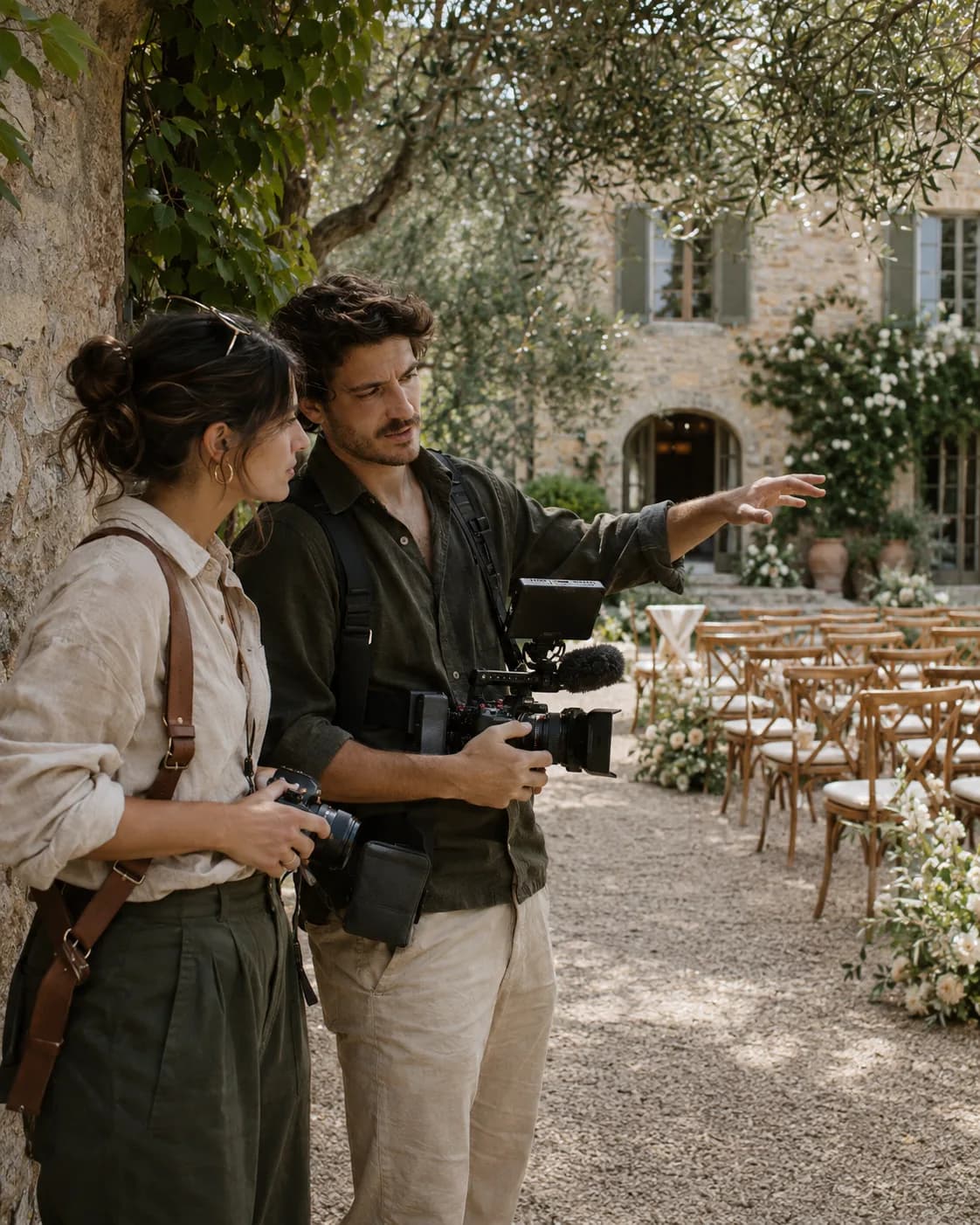
Talk before the wedding, know each other's priorities, and agree on who leads at each moment. Photographers need clean angles and portrait time. Videographers need clean audio and continuous coverage. Almost every conflict on a wedding day comes from one person not knowing what the other one needs.
This is written by Bower, built by a wedding filmmaker who has shared a lot of ceremonies with a lot of photographers. The best days were never the ones with the best gear. They were the ones where both teams talked first.
Before the wedding: the five-minute call
A short call or a few texts the week before saves a dozen awkward moments on the day. Cover these:
- The timeline. Make sure you're both working from the planner's latest version.
- Getting ready. Who's where, and when you'll swap rooms if you're covering both partners.
- The first look and portraits. How much time there is, and how you'll share it.
- The ceremony. Where each of you plans to stand, and whether the officiant has any rules about movement.
- Audio moments. Vows, letter readings, and toasts. Videographers need them clean.
- Exits and grand entrances. Who goes where so you're not in each other's frames.
If the couple hired both of you separately, the planner is usually the best person to connect you. Ask for your counterpart's contact early.
Moment by moment on the day
| Moment | Photographer needs | Videographer needs | How to share it |
|---|---|---|---|
| Getting ready | Details, candids, the dress or suit going on | Movement, natural audio, letters and gifts being opened | Take turns in small rooms instead of crowding in together |
| First look | The reaction, then portraits | The approach and the first words | Let video capture the approach and reaction, then photo leads the portraits |
| Ceremony | Clean angles of the couple and the kiss | Stable shots and clean vow audio | Agree on positions ahead of time and avoid crossing the aisle |
| Portraits | Time and direction | Movement and a few natural moments | Photographer leads, and builds in a minute or two of movement for video |
| Toasts | The speaker and the couple's reactions | A clean angle and clean audio | Give video their angle first, then work around it |
| First dance and exit | Clear sight lines | Smooth, continuous shots | Pick sides beforehand so neither of you ends up in the other's frame |
Audio is where photographers can make the biggest difference to the film. Photographer Katelyn James told Rangefinder that letter readings, toasts, first-look audio, and vows are top priorities for videographers. She times her shots around pauses so the shutter is easier to edit out, and during toasts she makes sure the videographer has the angle they need before she works around them (Rangefinder).
Filmmakers, the mirror image applies. Don't park a tripod in the middle of the aisle, don't hold the couple in one pose for so long that the photographer loses their portrait time, and move quickly out of a frame when you're asked.
And if something goes sideways, handle it quietly. A frustrated exchange between vendors is something the couple will remember long after they've forgotten who stood where.
After the wedding: sharing and credit
It's common for photographers and filmmakers to want each other's work, for a blog, a portfolio, or a sneak peek. That's a great habit, but ask first. In the U.S., the person who takes a photo is its default copyright owner (U.S. Copyright Office), so using each other's work without permission isn't yours to decide alone. Check your own contract with the couple, too, since it may limit how you share their wedding.
When you do share, credit each other clearly, and tag the other team when you post. It costs nothing, and it's the kind of thing photographers and filmmakers remember when a couple asks who they'd recommend.
In your contract, a short clause about working alongside other photo and video vendors sets expectations before anyone arrives.
Frequently asked questions
How do wedding photographers and videographers work together?
They talk before the wedding, agree on positions and who leads at each moment, and respect each other's priorities: clean angles and portrait time for the photographer, clean audio and continuous coverage for the videographer.
Who has priority during the ceremony?
Neither, ideally. Agree on positions ahead of time so you both get clean shots. During vows and toasts, help the videographer protect the audio.
Can photographers and videographers share each other's work?
Yes, with permission. Each creator owns their own work by default, so ask before using the other team's images or clips, and credit them when you share.
What should I put in my contract about other vendors?
A short clause saying you'll work alongside other photo and video vendors respectfully, and how you'll handle shots blocked by other vendors.
Try Bower free for 14 days. Keep the planner, the timeline, and your notes about the other vendors on the same Project as the contract.